

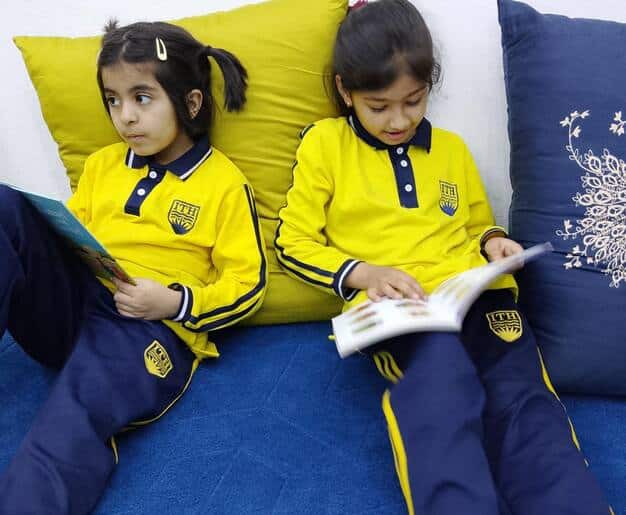
Starting at a new school is one of the biggest transitions a child can go through, and for many parents in Lahore, the academic side of the move feels manageable compared to the social side. Will my child make friends? Will they fit in? What if they feel left out? These questions are natural, and parents often search for practical ways to support new school friendships. Helping your child make friends at school is not about forcing connections — it is about creating the right conditions for friendships to develop naturally.
The Social Side of a New School That Parents Forget to Prepare For
Before a child joins a new school, parents typically focus on uniform, stationery, the commute, and the curriculum. The social landscape — who the children are, how they interact, what the friendship groups look like — is rarely discussed in advance. Yet for the child, this is often the most anxiety-producing part of the move. A few conversations at home about what to expect socially can make a significant difference to how prepared a child feels on their first day.
Why Making Friends Is Harder for Some Children — and That Is Okay
Some children make friends within days of joining a new school. Others take weeks or months. This is not a measure of how likable a child is — it reflects personality, social style, and the particular dynamics of the classroom they have joined. Introverted children, highly sensitive children, and children who have been in the same social group for a long time often find the process slower. That is completely normal and does not require intervention unless accompanied by visible distress.
What Is Happening in Your Child’s Mind in the First Few Weeks
In the first weeks at a new school, a child is simultaneously trying to understand new academic expectations, navigate unfamiliar physical spaces, learn the social rules of a new group, and manage the discomfort of not yet belonging. This is a significant cognitive and emotional load. Children who seem tired, withdrawn, or emotional after school during this period are usually not struggling — they are simply processing. Reserve judgment about how the transition is going until at least the fourth or fifth week.
Practical Things Parents Can Do Before School Even Starts
If you know your child is joining a new school, there are things you can do in advance:
- Visit the school with your child before the first day if the school allows it — familiarity with the physical space reduces anxiety.
- Find out the names of a few children in their class and mention them naturally at home so the names feel familiar.
- Talk about how friendships often start slowly and that it is fine if the first week does not go perfectly.
- Role-play simple conversation starters — what to say if someone sits next to them, how to ask to join a game.
What to Ask Your Child Each Evening to Help Them Open Up
“How was school?” almost never produces a useful answer. Specific questions yield more. Try: “Who did you sit next to at lunch today?”, “Was there anyone you noticed who was also new or quiet?”, “What did you do during break time?” These questions give your child something concrete to respond to and help you track their social adjustment without making them feel interrogated.
How to Work With the Teacher to Support Social Connection
Teachers have significant power to facilitate friendships in a classroom, and most are willing to help when parents raise the concern thoughtfully. At your next interaction with the teacher, mention that your child is still finding the social side of the transition challenging and ask whether there are seating arrangements, group activities, or buddy systems that could help. A teacher who is aware will often take small, practical steps that make a real difference.
After-School Activities That Naturally Build New Friendships
Shared activities are one of the most natural ways children build friendships, because they create repeated contact around something both children enjoy. If your child has a particular interest — art, football, coding, drama — look for an activity at or near the school that gives them a context beyond the classroom to meet peers. Friendships formed through shared interests tend to be more durable than those based purely on proximity.
Give It Time — Here Is What Truly Settled In Looks Like
A child who has genuinely settled into a new school will mention specific children by name, refer to school events without being prompted, and show a general willingness to attend in the morning. These are the real signs of social comfort — not the absence of any difficulty. Most children who are given adequate support, time, and a patient home environment will find their place in a new school within one to two terms.
At ITH School, we pay close attention to every child’s social well-being and academic progress. Reach us via Contact Us or WhatsApp. Follow us on Facebook, Instagram, LinkedIn, and X (Twitter). Visit us at 01 Block A, Chaudhry Road, KCHS Phase 1, Defense Road, Lahore — Location.