

Most adults in Pakistan will tell you they were never taught to manage money — they learned through trial, error, and occasional regret. If you want to teach kids money in a way that actually sticks, the best time to start is during the primary school years, when children are naturally curious, still forming habits, and small financial decisions feel real and meaningful to them. You do not need a classroom for this. Your home is the best learning environment.
Why Children in Pakistan Grow Up Without Basic Money Skills
Financial literacy is rarely taught formally in Pakistani schools, and in many homes, money is considered an adult subject — not something children need to understand. The result is that young people reach adulthood without the basic skills to budget, save, or distinguish between needs and wants. These habits, once formed in adulthood, are difficult to change. Building them during childhood, when the stakes are low, is far more effective.
The Right Age to Start Talking to Children About Money
Children as young as four or five begin to understand that money is exchanged for things. By age six or seven, they can grasp the concept of saving toward something. Between eight and eleven, they can begin to understand budgeting, comparing prices, and the idea that money is finite. The activities you use should match your child’s developmental stage, but in general, if a child is in primary school, they are old enough to begin learning.
Using Eidi as a Genuine and Fun Teaching Moment
Eid is one of the best natural opportunities to teach kids about money in Pakistan. When children receive Eid al-Adha, rather than saving it all for them or spending it immediately, involve them in the decision. Ask them: how much do you want to save, is there something specific you want to buy, and how long it will take if you set aside a little each week? This conversation — repeated each year — builds real financial thinking without feeling like a lesson.
5 Simple Money Activities for Home — Ages 5 to 11
- The Money Box Bank: Give your child three small jars labeled Save, Spend, and Give. Any pocket money is divided between all three. This introduces the idea that money can serve multiple purposes simultaneously.
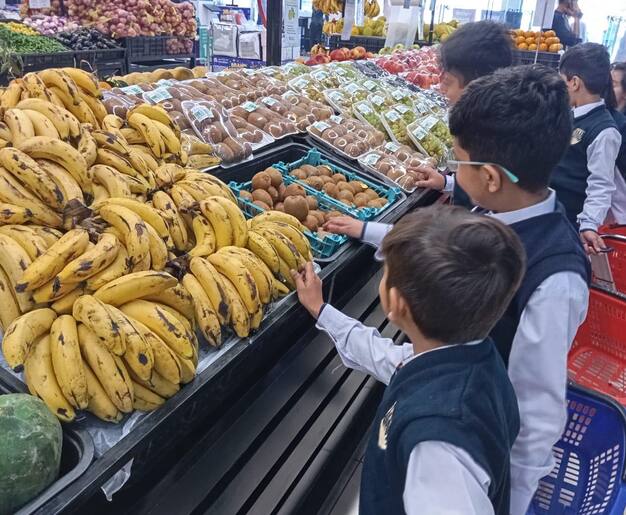
- The Supermarket Game: Give your child a small budget at the supermarket and ask them to find items within it. Even a 100-rupee limit on snacks teaches comparison and choice.
- The Waiting Challenge: Encourage your child to wait one week before buying something they want. If they still want it, they can use the money they’ve saved. Many children discover they no longer want the item — a powerful lesson.
- Coin Sorting and Counting: For younger children, simply sorting and counting coins builds number skills and familiarity with money.
- The Wants vs. Needs Sort: Write out a list of things and ask your child to sort them into needs and wants. The discussions that follow are more valuable than the activity itself.
Classroom Ideas: Weaving Money Concepts Into Existing Lessons
For teachers, money concepts can be naturally integrated into maths lessons through word problems on shopping, change, and budgeting. Reading lessons can include stories where characters make financial decisions. Social studies discussions about community and work are natural entry points for conversations about earning and spending. These integrations do not require separate lesson time — they enrich the subjects that already exist.
How to Talk About Family Finances Without Oversharing
Children benefit from understanding that money requires decisions, that families follow budgets, and that they cannot receive every request immediately. You do not need to share specific amounts or discuss financial stress to teach these lessons. Phrases like “That is not in our budget this month” or “We are saving for something important right now” show children how families manage money thoughtfully without burdening them with adult concerns.
Cannot Afford vs. Choosing Not to Buy — Why the Difference Matters
Many financial experts encourage parents to avoid saying, “We cannot afford it,” unless that is genuinely true. When it is not, say, “We are choosing not to spend money on that right now” instead. This wording models intentional spending and teaches children that people make spending decisions based on priorities, not simply on whether money is available. Children who understand this concept develop a healthier, more active approach to financial decision-making.
Small Lessons Now Build Big Habits Later
The goal of teaching kids about money in primary school is not to produce mini accountants. It is to plant the seeds of financial awareness early: that money has value, that saving is worthwhile, that spending involves choices, and that generosity is also part of a healthy relationship with money. These lessons, taught consistently through simple home activities, form habits that last a lifetime.
At ITH School, we believe education goes beyond textbooks and includes real-life skills. Reach us via Contact Us or WhatsApp. Follow us on Facebook, Instagram, LinkedIn, and X (Twitter). Visit us at 01 Block A, Chaudhry Road, KCHS Phase 1, Defense Road, Lahore — Location.