

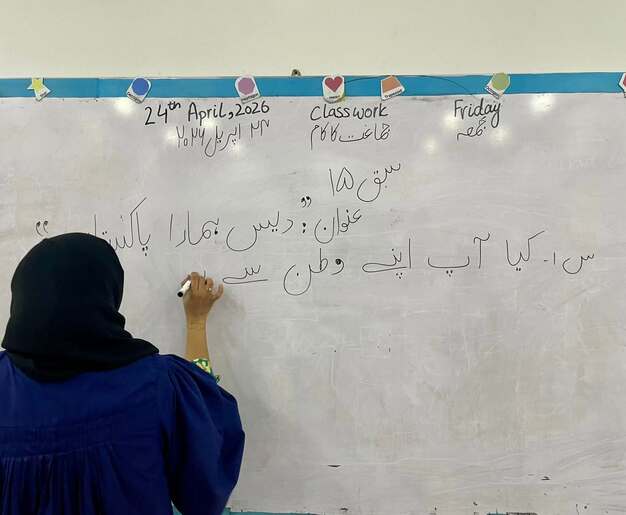
Lesson planning is one of the most important things a teacher does — and one of the most frequently rushed. In many Pakistani primary schools, lesson plans follow the same format week after week: explain the concept, give examples, assign practice. This is predictable, but it is not always engaging. These weekly lesson plan tips are designed to help teachers at all experience levels build more dynamic, student-centered lessons without requiring extra hours of preparation.
Why Most Pakistani Classrooms Follow the Exact Same Lesson Format
The transmission model of teaching — where the teacher explains, and students receive — is deeply embedded in Pakistani education culture. It is familiar, manageable, and requires minimal materials. But it places almost all the cognitive load on the teacher and does not account for the different ways children process and retain information. When every lesson follows the same format, even attentive children begin to disengage.
What a Genuinely Engaging Lesson Actually Needs to Include
Engagement is not the same as entertainment. An engaging lesson is one where students are thinking, responding, and making connections rather than passively receiving. Every lesson should have a clear learning objective that the students understand, an activation of prior knowledge at the start, a period of new input, structured opportunities for students to apply and discuss what they have learned, and a brief consolidation or reflection at the end. These five elements can be achieved in any lesson, across any subject.
The Weekly Plan Structure We Recommend for Grades 1–5
A practical weekly lesson plan structure for primary teachers looks like this: Monday introduces the week’s key concept with a discussion or demonstration. Tuesday and Wednesday consolidate through practice, group work, or application activities. Thursday is used for assessment, i.e a short quiz, an observation, or a student presentation. Friday includes a review and a brief activity that connects the week’s learning to something the children already know or care about. This structure builds in variety and prevents the monotony that comes from five identical lesson formats.
How to Plan for Different Learners in One Classroom
Every primary classroom in Lahore contains children at different levels of understanding. Differentiated planning does not require separate lesson plans for every student — it requires building flexibility into a single plan:
- Provide a core task that all students can access and an extension task for those who complete it quickly.
- Use mixed-ability pairs for discussion activities so stronger students can consolidate their understanding by explaining to peers.
- Allow different modes of response — some children demonstrate understanding better through drawing or speaking than writing.
- Adjust the complexity of questions you direct to different students during class discussion.
Building in Student Talk, Movement, and Reflection Without Chaos
Many teachers avoid building movement or discussion into lessons because they fear losing control of the classroom. In practice, the opposite is often true — students who have regular, structured opportunities to talk and move are less disruptive during the quiet, seated parts of the lesson. The keyword is structured. A two-minute partner discussion with a specific question is controlled. “Talk to the person next to you” without a task is not.
Realistic Time Management Across a Full and Busy Teaching Day
Planning realistic timing for each activity is one of the most practical weekly lesson plan tips available. Underestimating how long transitions take, how long it takes to give instructions, and how long it takes for children to settle after a discussion are the most common reasons lessons run out of time before reaching the consolidation phase. Build buffers into your plan. Mark the non-negotiable activities and those that can be shortened or moved to the next lesson if time runs short.
A Simple Weekly Planning Template — Explained Step by Step
A simple one-page weekly planning template for primary teachers should include: the learning objective for each lesson, a brief description of the opening activity (5 minutes), the main teaching or activity phase (15 to 20 minutes), the student practice or discussion phase (10 minutes), and the closing consolidation (5 minutes). Resources needed and differentiation notes round it out. This is not a complex document — it is a thinking tool that ensures each lesson has a clear structure before the day begins.
Start With Just One Lesson — Then Build Steadily From There
If redesigning your entire weekly plan feels overwhelming, start smaller. Choose one lesson per week to plan using a new structure or technique. Reflect on how it went — what engaged the students, what ran over time, what you would change. Build from there gradually. Teaching, like any professional skill, improves most through deliberate practice and honest reflection. One better lesson per week, sustained over a term, creates a significantly stronger teacher.
At ITH School, we support our teachers with professional development and a collaborative teaching culture. Reach us via Contact Us or WhatsApp. Follow us on Facebook, Instagram, LinkedIn, and X (Twitter). Visit us at 01 Block A, Chaudhry Road, KCHS Phase 1, Defense Road, Lahore — Location.